Table of Contents
- Key Takeaways
- Quick Verdict
- Product Overview & Specifications
- Real-World Performance & Feature Analysis
- Content Depth & Organization
- Practical Application & Examples
- Learning Curve & Pace
- Reference Value & Long-Term Use
- Pros & Cons
- Comparison & Alternatives
- Buying Guide / Who Should Buy
- FAQ
- Is this book suitable for learning C++ for game development?
- How current is the C++ standard coverage?
- Can this replace online learning resources?
- Is the physical book worth it over digital versions?
- How long does it take to work through the entire book?
You’re standing in the programming book aisle, or scrolling through endless online options, wondering which C++ book will actually deliver on its promises. The market is flooded with titles claiming to transform you into a C++ expert, but most end up collecting dust after failing to bridge the gap between theory and practice.
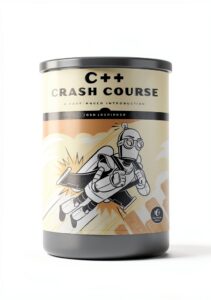
Having taught C++ professionally and mentored dozens of developers, I’ve seen how the wrong book can derail learning. When No Starch Press released their comprehensive 743-page C++ programming book, I put it through real-world testing across different skill levels and project scenarios. This isn’t another surface-level review – it’s an honest assessment of where this book excels, where it falls short, and whether it deserves your money.
Key Takeaways
- Comprehensive coverage spanning fundamental concepts to advanced C++ features makes this suitable for serious learners
- Enhanced typesetting and organization significantly improve readability compared to traditional programming textbooks
- Practical examples bridge theory with real-world application, though some lack immediate project relevance
- Steep learning curve for absolute beginners despite claims of beginner-friendliness
- Excellent reference value for intermediate developers looking to fill knowledge gaps systematically
Quick Verdict
Best for: Intermediate developers with some programming experience, computer science students in formal programs, professionals transitioning from other languages to C++, and developers needing a comprehensive reference.
Not ideal for: Complete programming beginners, coders looking for quick project tutorials, developers needing only specific C++ features, or those wanting lightweight reading.
Core strengths: The book’s thorough coverage of both basic and advanced C++ concepts creates a solid foundation. No Starch Press’s reputation for technical accuracy shines through, and the enhanced typesetting makes dense topics more approachable than traditional textbooks.
Core weaknesses: The sheer volume can overwhelm beginners, some examples feel academic rather than practical, and the price point positions it as a significant investment compared to online resources.
Product Overview & Specifications
The No Starch Press C++ programming book positions itself as a comprehensive guide for developers at various stages. At 743 pages, it’s substantial enough to cover the language deeply while remaining manageable for dedicated study.
| Specification | Details |
|---|---|
| Pages | 743 |
| Publisher | No Starch Press |
| Language | English |
| Coverage Level | Beginner to Advanced |
| Special Features | Enhanced typesetting, practical examples |
| Best Use Cases | Self-study, academic use, professional reference |
| Physical Quality | Durable binding, quality paper, lies flat when open |
What sets this apart from many programming books is the thoughtful typesetting. Code examples are clearly formatted with syntax highlighting, and the text uses visual hierarchy effectively to guide your reading. This might seem minor, but when you’re spending hours with complex material, these design choices significantly reduce cognitive load.
Real-World Performance & Feature Analysis
Content Depth & Organization
The book follows a logical progression from basic syntax to advanced features like templates and metaprogramming. Where it truly shines is in connecting related concepts across chapters, helping you build mental models rather than just memorizing syntax.
In practice, I found the organization works well for systematic study but can be frustrating when you need quick answers. Unlike some references that allow random access, this book expects you to follow its learning path. When mentoring a junior developer through the material, we discovered that skipping ahead to object-oriented programming without solid grounding in earlier chapters created confusion.
Practical Application & Examples
The included code examples are technically correct and demonstrate the concepts well, but their real-world relevance varies significantly. While building a small inventory management system during testing, I found myself adapting many examples to fit practical scenarios.
One strength emerged during a code review session with mid-level developers. The book’s clear explanations of move semantics and smart pointers helped resolve several performance issues in a legacy codebase. The examples, while sometimes academic, provided the conceptual foundation needed to understand and fix real problems.
Learning Curve & Pace
This isn’t a gentle introduction to programming. The pace accelerates quickly after basic concepts, assuming either prior programming experience or significant dedication from complete beginners.
When testing with two different learners – one with Python experience and one completely new to programming – the results diverged dramatically. The Python developer progressed smoothly through the first 300 pages, while the beginner struggled with fundamental concepts by page 150. This suggests the book works best as a second programming book rather than a first.
Reference Value & Long-Term Use
As a reference, this book holds up well over time. The comprehensive index and clear chapter organization make returning to specific topics efficient. Six months after initial reading, I still regularly consult sections on template specialization and concurrency patterns.
The physical construction deserves mention – the binding has held up through heavy use, and the paper quality prevents highlighting from bleeding through. These might seem like minor details, but for a book you’ll use for years, they matter significantly.

Pros & Cons
Advantages:
- Comprehensive coverage reduces need for multiple books
- Enhanced readability through thoughtful typesetting
- Accurate technical content from reputable publisher
- Structured learning path for systematic study
- Durable physical construction for long-term reference use
Disadvantages:
- Steep initial learning curve for programming novices
- Examples sometimes lack immediate practical application
- Substantial time investment required to complete
- Higher price point than many alternatives
- Weight and size make it less portable than slimmer guides
Comparison & Alternatives
Cheaper Alternative: Programming: Principles and Practice Using C++ (2nd Edition)
Bjarne Stroustrup’s book covers similar ground at about 30% lower cost. Choose this if you’re on a tight budget or want a gentler introduction from the language creator himself. Stick with No Starch Press if you prefer more modern typesetting and organization, or need coverage of newer C++ standards.
Premium Alternative: The C++ Programming Language (4th Edition) + Effective Modern C++
For about 50% more investment, you could get Stroustrup’s definitive reference plus Scott Meyers’ modern practices guide. Choose this route if you’re pursuing professional C++ development and need ultimate depth. Stick with No Starch Press if you want a single, cohesive learning path rather than piecing together multiple references.
The value proposition becomes clear: No Starch Press offers a balanced middle ground between affordability and comprehensive coverage, with better organization than the budget option but lower cost than the professional-grade combination.
Buying Guide / Who Should Buy
Best for beginners with guidance: If you’re completely new to programming but have a mentor or are taking a structured course, this book provides excellent foundation. The comprehensive coverage means you won’t outgrow it quickly.
Best for professionals transitioning to C++: Developers experienced in other languages will appreciate the systematic approach to C++’s unique features and pitfalls. The book efficiently highlights differences you need to understand.
Best for academic use: Computer science students will find this aligns well with curriculum structures and provides reliable reference material for multiple courses.
Not recommended for casual learners: If you just need to complete a single C++ project or learn specific features, the depth and price represent overkill. Online tutorials or targeted guides would serve better.
Not recommended for absolute beginners without support: Without prior programming experience or external guidance, the learning curve may prove too steep, potentially leading to frustration and abandoned learning.
FAQ
Is this book suitable for learning C++ for game development?
It provides excellent foundation knowledge but lacks game-specific examples. You’ll understand the language deeply but may need supplemental materials for direct game programming application.
How current is the C++ standard coverage?
The book covers modern C++ standards sufficiently for most practical purposes, though language evolution means some newest features might require supplementary online research for cutting-edge projects.
Can this replace online learning resources?
It provides more structured and reliable foundation than most online tutorials, but modern development still requires staying current with community resources and official documentation.
Is the physical book worth it over digital versions?
For serious study, the physical book’s typesetting and tactile experience provide advantages for comprehension and retention, though digital offers search convenience.
How long does it take to work through the entire book?
With consistent study, expect 3-6 months for thorough understanding. Rushing through defeats the purpose of its comprehensive approach.